
Security forces in Jammu and Kashmir's Samba and Kathua districts have launched extensive search operations after suspected Pakistani drones were detected near the International Border. One drone was seen in Samba and another in Kathua, prompting intensified surveillance.
Security forces in Jammu and Kashmir initiated extensive search operations along the International Border and Line of Control in Samba and Rajouri districts following multiple overnight sightings of suspected Pakistani drones. The increased drone activity has prompted concerns over potential air-dropping of narcotics, weapons, or facilitation of infiltration, leading to heightened surveillance and anti-drone measures.
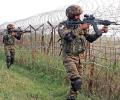
This marked the sixth consecutive night of ceasefire violations by Pakistan along the LoC, amidst heightened tensions between New Delhi and Islamabad following a recent terror attack in Pahalgam on April 22.

Security forces in Jammu and Kashmir's Kishtwar district killed two Pakistani terrorists affiliated with Jaish-e-Mohammad (JeM) in an encounter. One of the deceased is believed to be a notorious JeM commander, Saifullah, who had been active in the region for five years.

Assam Chief Minister Himanta Biswa Sarma has accused Congress MP Gaurav Gogoi of having a 'deeper connection' with a Pakistani national and violating FCRA rules, prompting calls for a national probe.

Speaking to reporters at Tezpur, Sarma also said that he would be happy if Gogoi files a case against him for making such a remark.

Gujarat police arrest a woman allegedly involved in trafficking job aspirants to Myanmar and Thailand for cyber slavery. The accused lured people with promises of high-paying jobs and forced them to work for international cyber crime syndicates.

Jyoti was among 12 people who have been arrested from Punjab, Haryana and Uttar Pradesh over the past two weeks on charges of espionage, with investigators pointing at an alleged Pakistan-linked spy network operating in north India.

A Pakistani intruder was killed by the BSF while attempting to cross the International Border in the Kathua district of Jammu and Kashmir. The BSF is lodging a protest with Pakistani counterparts.

Giving details of how she silenced three hostile posts resorting to unprovoked firing on her position during Operation Sindoor, she said, "I had three posts falling in my area. I pinned down the people at all three hostile locations. We hit them with every weapon we had. They were forced to flee their posts."
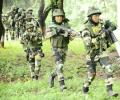
Among the medal winners are a deputy commandant rank officer, two assistant commandants and an inspector.

The Border Security Force (BSF) remains on high alert along the International Border (IB) and has not let its guard down, BSF Inspector General, Jammu Frontier, Shashank Anand said on Tuesday. Operation Sindoor, aimed at preventing infiltration attempts, continues as Pakistan cannot be trusted, he added. Anand highlighted the BSF's robust response after the April 22 Pahalgam terror attack, including destroying multiple terror launch pads and thwarting infiltration attempts.
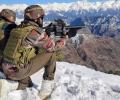
Pakistan's troops have engaged in unprovoked firing along the Line of Control (LoC) and International Border (IB) in five districts of Jammu and Kashmir, prompting retaliation from the Indian Army. This marks the eighth consecutive night of such incidents, following heightened tensions stemming from a recent terror attack in Pahalgam. Civilians residing along the LoC and IB are preparing their bunkers in anticipation of potential escalation.

One-time watch for all those wear their patriotism up their sleeve, don't bother about checking the facts, and want to enjoy a dramatic mix of fact and fiction, notes Prasanna D Zore.

The Border Security Force (BSF) is training specialized 'drone commandos' and 'drone warriors' for modern warfare, with plans to deploy them in missions like Operation Sindoor. A 'School of Drone Warfare' has been inaugurated to provide training in UAV operations, anti-drone warfare, and surveillance.
For the ninth consecutive night, Indian and Pakistani troops engaged in small arms fire along the Line of Control (LoC) in Jammu and Kashmir, continuing a pattern of heightened border tensions. The skirmishes, initiated by Pakistani troops in violation of the ceasefire agreement, have led to a tense situation along the LoC and International Border (IB). The incidents come in the wake of the April 22 terror attack in Pahalgam, which claimed the lives of 26 people, mostly tourists. Civilians residing near the border have begun preparing their bunkers, anticipating potential escalation. Despite a recent hotline conversation between the Directors General of Military Operations (DGMOs) of India and Pakistan, where India cautioned Pakistan, the ceasefire violations persist.

Assam Chief Minister Himanta Biswa Sarma has accused Congress leader Gaurav Gogoi's British wife of collecting intelligence documents on behalf of the Pakistani climate lobby. Sarma claims to have documentary evidence of Gogoi and his wife's ties with Pakistan and will reveal everything publicly by September 10. Gogoi has denied the allegations, calling them a "C-grade Bollywood movie" and stating that he has only visited Pakistan once 12 years ago. Sarma alleges that Gogoi's wife, Elizabeth Colburn, worked for the climate lobby and had a close relationship with Pakistan.

The Border Security Force (BSF) launched "Operation Sindoor" in retaliation to unprovoked firing and shelling by Pakistani Rangers along the International Border (IB) in Jammu. BSF troops destroyed three terrorist launch pads and targeted 76 Pakistani border outposts and 42 forward defence locations. The BSF action came after Pakistan launched heavy firing and shelling on 60 Indian posts and 49 forward positions, reportedly providing cover for an attempted infiltration by 40-50 terrorists.

Villagers living near the International Border and Line of Control in Jammu are on high alert following the recent terror attack in Pahalgam, preparing underground bunkers and accelerating crop harvesting. The incident has heightened security concerns despite a renewed ceasefire agreement between India and Pakistan in 2021. Residents are demanding swift action against the perpetrators and their handlers.
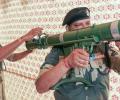
The Border Security Force (BSF) is raising a maiden 'drone squadron' for deployment along the India-Pakistan border. The squadron will comprise reconnaissance, surveillance and attack drones and specially-trained personnel.
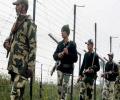
The Border Security Force (BSF) has lodged a protest with Pakistan Rangers after a BSF jawan was apprehended by the Rangers last week after he mistakenly crossed the international border in Punjab. The incident comes amid heightened tensions between India and Pakistan following the Pahalgam terror attack.
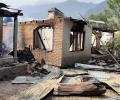
Hundreds of residents along the Line of Control (LoC) and the International Border (IB) in Jammu and Kashmir were evacuated to safer zones after Pakistani shelling following Indian airstrikes on terror targets in Pakistan. The shelling killed 12 people, including four children and two women, and injured over 50. The evacuations come amid heightened tensions between India and Pakistan following the April 22 terror attack in Pahalgam that left 26 civilians dead. The government has provided temporary shelter for those evacuated.
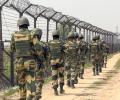
This is the second such incident along the India-Pakistan border in Jammu division in two days.

Senior Congress leader Ripun Bora has been summoned by Assam Police for questioning in connection with a case related to party colleague Gaurav Gogoi's alleged links with Pakistan. The summons comes after Bora publicly stated that Gogoi's wife received salaries from the Pakistan government, which prompted Chief Minister Himanta Biswa Sarma to claim that Bora "knows a lot" about Gogoi's alleged links. The case centers around allegations of Pakistani national Ali Tauqeer Sheikh, who is claimed to have links with Gogoi's British wife Elizabeth Colburn, interfering in India's internal affairs. Gogoi has vehemently denied the allegations and accused Sarma of making baseless accusations.
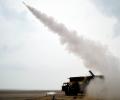
The Indian Army in the intervening night of May 8 and May 9 successfully repelled and responded to multiple drone attacks by Pakistan along the western border and the Line of Control (LoC) in Jammu and Kashmir.

The firing exchanges are taking places in five districts out of seven border districts of Jammu and Kashmir. So far, there has been no firing reports along International Border in Samba and Kathua districts.

There was no traditional exchange of sweets and pleasantries between the two sides along the International Border, the officials said, attributing it to the tense situation following the recent ceasefire violations by Pakistan Rangers that left a Border Security Force jawan dead.

Senior Congress leader and former Rajya Sabha MP Ripun Bora was on Thursday questioned by Assam Police in connection with a case related to party colleague Gaurav Gogoi's alleged links with Pakistan, officials said.
Pakistan troops have violated the ceasefire agreement for the 11th consecutive night, firing on Indian posts along the Line of Control (LoC) in Jammu and Kashmir. The firing began in Kupwara and Baramulla districts and spread to other sectors, including Poonch, Rajouri, Mendhar, Naushera, Sunderbani, and Akhnoor. The Indian Army responded promptly and proportionately. The ceasefire violation comes despite a recent phone call between the Directors General of Military Operations (DGMOs) of India and Pakistan on April 29. This marks the latest escalation of tensions between the two countries, following a terror attack in Pahalgam in April.

In a post on X, the additional directorate general of public information posted: "Pakistan again violates the Ceasefire Agreement by firing artillery in Bhimber Gali in the Poonch-Rajouri area. Indian Army is responding appropriately in a calibrated manner."
Pakistani troops continued unprovoked small arms firing in different sectors along the Line of Control (LoC) in Jammu and Kashmir for the 10th consecutive night, prompting effective retaliation by the Indian army. The ceasefire violations, which started after the April 22 terror attack in Pahalgam, were reported from eight places across five districts in the Union Territory during the intervening night of Saturday and Sunday. Indian Army responded promptly and proportionately to the unprovoked firing, a defence spokesperson said.

A senior government official confirmed that after a meeting with other stakeholders, the decision has been taken and airlines and airport authorities have been informed about it.

People along the Line of Control and International Border in the Jammu region continue to live under the shadow of death, with unexploded mortar shells fired by Pakistani troops still embedded in farmlands and residential areas even though hostilities have stopped for nearly a week. IMAGE: Kindly note that this image has been posted for representational purposes only. Photograph: / Rediff.com Despite the May 10 understanding between India and Pakistan, locals describe the border areas as a 'death trap'. Sixty-two-year-old Balvinder Singh, who returned to his home in Pargwal sector on May 14, recounted a narrow escape. "Two shells exploded in our compound, damaging our house. Three more landed on our farmland. We were terrified and told our family to stay away from the fields until the Army could help," Singh told PTI. Army engineers later came to the village and safely defused the unexploded shells, bringing a temporary sense of relief. "Fear is writ large on the faces of people to these death traps in border hamlets", he said. Scenes of destruction are evident rooftops torn apart, broken houses, windows punctured by shrapnel, and carcasses of cattle lying in pools of blood. The acrid smell of gunpowder still lingers in the air. Sardar Gurmeet Singh faced a similar ordeal. His family could not re-enter their home as a live mortar shell had sunk into the compound in a village close to the International Border. "The army's bomb disposal squad removed it after four days, allowing us to finally enter, back home," he said. Indian Army engineers have launched a sweeping clearance operation across border districts, defusing over 80 unexploded shells in the past five days -- including 6 in Pargwal, 19 in Rajouri, 42 in Poonch, and 12 along the IB. "These shells, mostly 120 mm calibre, have a range of 15 to 30 km and pose a serious threat to both civilian and military targets," an Army officer said. "Many of them were fired by Pakistan during recent hostilities." On May 7, the Indian Army launched Operation Sindoor, conducting precision strikes on nine terror hubs in Pakistan and Pakistan-occupied Jammu and Kashmir (PoJK) in response to the April 22 terror attack in Pahalgam that killed 26 people, most of them tourists. The subsequent retaliation by Pakistan pushed the region to the brink of war. From 7 to 10 of May, 27 civilians were killed and over 70 injured in Pakistani shelling in the Jammu region. Farid Din Gujjar, a resident near the border, expressed fear about returning to his fields. "Several shells created deep craters in our paddy land. We cannot resume work until all unexploded ordnance is cleared. It's a death trap," he said. Army units, in coordination with Jammu and Kashmir Police, have evacuated high-risk zones and issued stern warnings to residents not to touch any suspicious objects or unexploded shells. In one major operation, 42 live shells were safely destroyed in the Poonch villages of Jhullas, Salotri, Dharati and Salani. "All safety protocols were followed. The shells posed a serious danger to local lives," an Army spokesperson said, calling the effort a 'continued commitment to protect civilians and restore normalcy'. Poonch saw the vast majority of deaths due to shelling. Security officials said that Pakistan used a mix of mortar shells, armed drones, and missiles during the shelling spree, specifically targeting civilian habitations and border towns in Jammu, Samba, Kathua, Rajouri, and Poonch. As clearance operations continue, the border residents are slowly returning to their homes, but with caution, fear, and lingering uncertainty about shelling that may yet happen in the future.
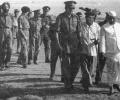
In what was perhaps the most critical meeting before full-scale war broke out, Shastri defined India's immediate war objectives to his defence minister, army, and air force chiefs: 'To defend against Pakistan's attempts to grab Kashmir by force and to make it abundantly clear that Pakistan would never be allowed to wrest Kashmir from India; To destroy the offensive power of Pakistan's armed forces...' A fascinating excerpt from Shiv Kunal Verma's must-read 1965: A Western Sunrise India's War With Pakistan.

Tharoor said his remarks were preceded by a reference to the several attacks that have taken place in recent years alone, during which previous Indian responses were both restrained and constrained by India's responsible respect for the LoC and the IB.
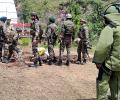
The officials said dozens of unexploded explosives were destroyed by the experts along the Line of Control in Rajouri and Poonch districts and along the International Border in Jammu and Samba which witnessed intense cross-border shelling and drone attacks from May 7 to May 10.
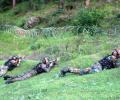
On February 24, India and Pakistan released a joint statement saying that they have held discussions regarding establishing a mechanism for hotline contact among both nations.

A series of blasts took place in Srinagar city as the security agencies brought down a drone that was seen hovering over Batwara area of the city, close to an army installation, officials said.

The worst-hit in the Pakistani shelling was Poonch district which accounted for all the civilian deaths, the officials said, adding 28 persons were also injured and the condition of some of them was stated to be critical.
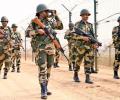
The Border Security Force has ordered mobilisation of additional manpower at posts along the India-Pakistan border in Punjab and Jammu as part of its measures to strengthen the anti-infiltration grid and check the intrusion of drones carrying ammunition or drugs, official sources said Monday.
